Showing posts with label French Kids Eat Everything. Show all posts

Wednesday, October 7, 2015

Can Cheap Food Be Delicious?

Considering the amount of money (not to mention time) my hub spends putting in and tending his garden every summer, I'm pretty sure home-grown food doesn't beat farmed in price, only in enjoyment. We also tend to eat much more of the home-grown produce because--well, you know--when the harvest arrives, it arrives.

Despite two tomato sauce batches, one tomato soup, five Caprese salads, five batches of baked tomatoes, one recipe of bruschetta, tomatoes added to other kinds of salad and soup and Spanish rice, and countless bowls of pico de gallo, we still had plenty of crop left on the vine when it was time to tear the garden out.

The dregs
Thankfully, tomatoes continue to ripen after harvest, albeit not as deliciously as on the vine in hot summer sun. So our little troops are lined up on newspaper in the garage, to extend our season into late fall.

I don't have high hopes for the little green guy
Because I hate to waste food. My kids are regularly subjected to "Clean-Out-the-Fridge" soup, and no chicken bones ever pass through the kitchen without being simmered for stock. (If you don't have enough for a stockpot or time to process them, just throw them in a freezer bag and keep collecting until you do.)

I was pretty excited to hear about this book, you might imagine:
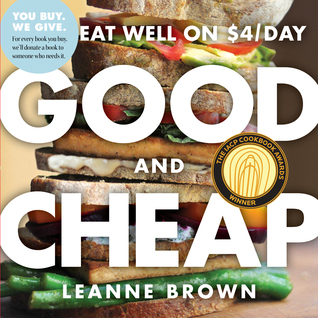

Not only does the publisher promise affordable yumminess, but they also "donate a book to someone who needs it" for every copy purchased! Awesome idea. How it plays out in practice remains to be seen, however, because the book contains recipes that even ardent foodies might hesitate over, like "Mashed Beets" and "Broiled Eggplant Salad" and "Barley Risotto with Peas." Look--I cook my own food and I shop at a farmers market regularly, but there is no way I could get my kids to try 60% of the book's offerings. It might be better to bundle the free book with free copies of
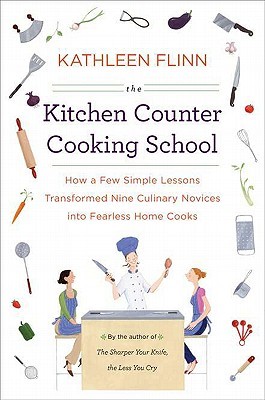

to help "someone who needs it" find the confidence to cook at home, and then throw in


to help all of us get our kids to try more foods and flavors. This one would also work:
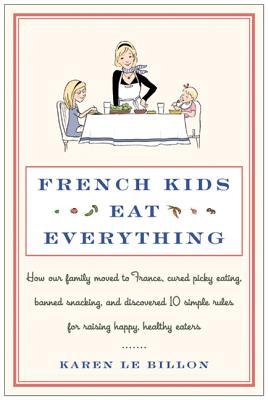

All that said, giving Good and Cheap away for free is a great start. Just don't expect it to change the way America eats.

Since my hub and I like vegetables, though, and since his ripping out of the garden filled our pantry with butternut squash, I tried out a recipe from Good and Cheap and found it luscious! (Our squash wasn't as ripe as I would like, so the sweeteners added were my own idea.)

As promised, this recipe was cheap and much more than good.

The main ingredients


Lightly Curried Butternut Squash Soup (adapted from Good and Cheap; Market ingredients "*")

1 butternut squash* (about 2 lbs)
1 Tbsp butter
1 medium onion*, chopped
1 bell pepper*, chopped (recipe called for green, but I would use red or orange next time, so there isn't a bitter note)
3 cloves garlic, minced*
1 tsp cumin
1 tsp coriander
1 tsp turmeric
1/2 tsp cayenne pepper
1 can coconut milk
1/4 cup brown sugar, optional
dash maple syrup, optional
salt and pepper

sour cream for garnish
chopped scallions for garnish*
chopped cilantro for garnish*

To make my life easier, I halved the squash, seeded it, and threw it in a crock pot on LOW for a few hours until it was cooked. Then I scraped out the flesh and added to the soup later.

Melt butter in soup pot over medium and saute onion through garlic until tender. Add spices and cook another 2 minutes, stirring. Add cooked squash, coconut milk, sweeteners, and 3 cups of water. Stir.

Bring soup to a boil, then reduce heat and simmer 30 minutes. Season to taste with salt and pepper.

Blend thoroughly with immersion blender. Serve with dollop of sour cream and sprinkle of garnish.

I plan to try several more recipes in the book and will report back. In the meantime, just two more Thursday Markets, and this will be Skagit River Ranch's last Thursday. Be sure to ask about signing up for there Bellevue Buyers Club, if you still want to order meat in the off-season.

Wednesday, September 4, 2013

Color Me Surprised

My oldest started high school this week. She's pretty close-mouthed with me, as a rule, but one bit of information she volunteered to the whole family was, "At school they have all these vending machines!" Well, yippee. I groused about fake food in plastic packaging that never went away and was digested by sea animals, a comment that got about as much attention as you might imagine from a fourteen-year-old. The good news is, she has this not-unusual aversion to spending her own money, so if I don't subsidize vending machine purchases, they're not likely to happen.

What I will subsidize is real, fresh, unpackaged food from our local farmers, and, at least in late summer, there's plenty to tantalize.


Charentais (French Canteloupe)
Have you had your first miniature, super sweet and juicy Charentais melon yet? My boy has a thing about only eating foods that appear exactly how he expects them to, which means he won't eat honeydew or white-fleshed melons because melons should either be orange or red inside. (And yet he has no objection to a violently-colored aquamarine Go-Gurt or Otter Pop!) Sigh. But he will eat Charentais melons, thank heavens, since they fill the color bill.

Just the right shade of orange
Not the right shade, but crunchy and tasty were Alvarez's yellow watermelons:


After one taste, the boy rejected this, but the next day, having had 24 hours to mull over the idea, he tried again and declared, "It tastes better today." Uh huh.

In an earlier post I mentioned the great variety of peppers, both sweet and spicy, carried at the Market. Check these ones out:

Sweet peppers aren't just stoplight colors!

I forgot to write down the name (raise your hand if you know it), but they're sweet and they're going in tonight's spaghetti sauce. The downside to their color, however, is that the boy will be able to pick them out, unlike when I use red bell pepper...

For you traditionalists, you can still find familiar food looking familiar:


Although I overheard that white eggplants are actually less bitter than standard purple ones, and I've seen those at the Market, too. So take advantage of both kinds--drizzle with olive oil, sprinkle on some salt and pepper, and grill. I'd even add some shredded Parmigiano-Reggiano or other hard cheese when it's nearly done. Mmmm... Works for zucchini and summer squash, as well, which are all over the Market, if not being dumped by the boxload on your doorstep by desperate neighbors.

In her book French Kids Eat Everything (which I mentioned some months back in this post), author Karen Le Billon writes about her year in France with her school-aged kids, and how the culture there is to expose kids to a variety of foods until they learn to like them. There are no vending machines. There are not even "choices" in the cafeteria at lunch. I remember feeling despair when I read the book because it was too late for me, and my kids were already picky about certain things, but I am here to say it is not too late after all. If my twelve-year-old can get over yellow watermelon after a 24-hour cooling-off period, there is hope.

Say no to the vending machines and packaged foods! Swing by the Market this week and throw something new and different-colored in your basket. When in doubt, grill it. If your kids want snacky foods to pack in their lunches, grab some jerky or kale chips or berries or cheese. Put some soft pretzels or hand pies in the freezer to reheat later. My kids may not eat everything, but I hope, before I'm done with them, they might reach for the handmade food first and the lab-made food last.

Wednesday, December 19, 2012

Favorite 2012 Reads for the Foodies in Your Life

According to Goodreads, I read eleven food-related books in 2012, not counting the couple I tried and abandoned. If you find yourself on December 19th (or later), with no ideas in the pipeline for the foodie in your life, consider a book! (Or, alternately, if some of your recent kitchen-gift concoctions have gone woefully awry...)

You may have seen some of these at the Bellevue Farmers Market, those times we hosted Readers to Eaters. They can also be found at the wonderful University Book Store Bellevue, which gift wraps in the loveliest papers and ribbons for free. They also ship media rate gratis, so if your recipient doesn't mind lateness, that option is still open for you. For friends with ereaders, these books can be found in the usual cyber places, and University Books now sells Kobo ereaders.

And now, without further ado, my 2012 favorites:

Best Memoir
Le Billon undergoes food culture shock after moving to France. The book combines memoir with cultural studies with parenting. I can't say it changed what I fed my family (though it did cure us of car snacking for about three days), but it made me wish I could start over with my kids, food-wise. I posted a more complete review here.

Best History
Granted, I only read three food histories this year, but this one was the most consistently informative and fascinating. Pretty self-explanatory. Pair it with your favorite peanut butter and you're set! As promised, here is my extensive Goodreads review of it.


Best Exposé


An astonishing, informative, heartbreaking, and ultimately hopeful book about the tomato in general and the conventional tomato industry in Florida, in particular. Halfway through I was vowing that, should I ever find myself on the East Coast, I wouldn't touch a single conventionally-grown tomato, in protest of the dreadful working conditions; rampant lethal pesticide and fungicide use; and--let's face it--awful hardness and lack of flavor. By the end, however, Estabrook had me feeling optimistic about the dreadful working conditions, at least. Not only had major fast-food chains and Whole Foods signed on to pay a wee bit more for fairer worker treatment, but nonprofit private groups were improving worker housing and job conditions. With the momentum going that way, I imagine the other grocery store chains will follow eventually. The things may still taste like big, watery NOTHING, but at least no one would be poisoned, enslaved (not kidding) or dying, so that I could have chunks of the big, watery NOTHING in my winter salad.

A couple interesting facts I learned about tomatoes in general:

1. They were declared a "vegetable" by the Tariff Act of 1883 to protect American farmers from Caribbean imports.

2. "All varieties of cultivated tomatoes that have ever been bred contain less than 5% of the genetic material in the overall tomato gene pool" (p.12). Yes, all those different sizes, colors, shapes, and flavors found even at the best farmers markets are very similar at the DNA level--inbred, feeble, and vulnerable to just about everything.

3. An acre of FL tomatoes receives 5x as much fungicide and 6x as much pesticide as a CA tomato.

Your best bet? The local farmers market. If you didn't know already, tomatoes grown in soil and picked when ripe have the best flavor. And you can ask the farmer himself about how he treats and pays his workers.


Best Scary Book
This one doesn't really count because it's not available until December 27. I suppose Lustig and his publisher figured no one wanted to hear this news before Christmas. Per my earlier post, this is quite the book. I swore off sugar for all of two days before succumbing to Christmas cookies and some kind of almond cake, but I vow to try again in January.

In other news, I roasted my Skagit River Ranch turkey, and we're taking on the 13-Meal Challenge again. The tally so far:

1. Fancy turkey sandwiches.

2. Turkey a la King.

No post next week, but do enjoy your holidays!


Tuesday, July 31, 2012

Food of Champions: Olympic Edition

#4 on Unpleasant Things to See: Frenchmen triumphing over you (AP Photo/Mark J. Terrill)
So, like many Americans, I've been glued to the couch, subjected to whatever NBC chooses to show me of the 2012 Summer Olympics, whether that be interviews with John McEnroe (huh?) or Ryan Seacrest (seriously--what???), gymnastics at 10:30 p.m., or a replay of the swim final I already watched hours before on the live stream. By the time they aired the Men's 4x100 Freestyle Relay, I had begun to hope that maybe I only dreamed the crushing livestream version, where France's anchor ate Ryan Lochte for lunch. Alas.

France's Olympics aren't going too shabbily. As of this morning, they have 9 total medals to the U.S.'s 18, and a greater proportion of theirs (44.4%) are Gold, to our 33%. Their secret? I mean, besides hard, hard work and carefully-cultivated natural talent? Lately I'm thinking it's the food. I recently finished a fascinating read by Karen Le Billon, French Kids Eat Everything. The title says it all, really, and when I had finished her account of her family's year in France, where they were all indoctrinated into the French culture of food, I was convinced. Dang it! Why did my kids turn up their noses at odd vegetables--all right, at even many common vegetables--beg for snacks all afternoon, and make faces when I presented something new at the table? No more. I was going to introduce more variety in our diet, limit the snacking, and, when the inevitable chorus of "What is that? Ewww!" went up, I was going to go with the French response: "Try it. If you don't like it this time, you will after you've had it a few times." I might even throw in a "you don't wanna swim like Ryan Lochte, do you? You wanna swim like Yannick Agnel. To swim like Yannick Agnel, you must eat everything, like Agnel does."

Take this recent salad, I made, 100% with Market ingredients:
Spinach, lettuce, cherry tomatoes, cucumber, onions, Tieton goat cheese feta. And then I dressed it with
because Wade at Rockridge had urged me to try it out and give feedback. He's told me twice what "shiso" is, and I've remembered it zero times. Some kind of Japanese herb. In any case, the dressing tastes cucumber-y and very, very fresh. Our houseguests took seconds, if not my children.

At the same meal we served grilled Market vegetables alongside: bell peppers, sweet onions, and teeny tiny baby potatoes I got at Alvarez. The main dish: Two If By Seafoods salmon glazed with olive oil and honey.

Recently the Huffington Post ran a slideshow on some Olympian diets. Beach volleyball champ Misty May-Treanor likes Greek yogurt with honey, for instance. On Saturdays you can find Samish Bay's luscious Greek yogurt. Swirl in a spoonful of Cascade Natural Honey and a handful of granola or almonds, and you're set. Just about all the athletes ate a variety of vegetables and steered clear of processed foods. For those who needed to carb load before a big event, sandwiches hit the spot. And you know you can put whatever you want in the middle--it's the bread that makes the sandwich, and we have such tasty ones both Thursdays and Saturdays. The athletes would love our Market.

One final reason to hit the Market this week: some theorize all those fruits and veggies and whole grains relieve depression. The jury may still be out, but it certainly might impact minor bummed-out feelings, like seeing your relay get trounced or looking at all those Olympian bods and trying to calculate how many calories you've (not) burned, prone, on the couch.

Wednesday, April 25, 2012

Raising Better Eaters?

Love, love me do (Photo:Innovation Diaries)
"Gross," said my middle-schooler. "Radish salad."

She was checking out the school lunch menu and opted to pack. I let my kids buy school lunch only once a week, mostly because there are three of them and I'm cheap, but also because such nutritional bonanzas as "French Toast Sticks," industrially-produced "Chicken Tenders," and possibly-downed-cow "BBQ Riblets" are best enjoyed in moderation. The Bellevue School District has actually made a concerted effort to offer healthier food, offering more whole grains and genuine vegetables (as opposed to French fries), and axing corn dogs, to my children's dismay. On the April menu, I even discovered "locally-grown peas"! All great news--if the kids will eat it.

Therein lies the rub.

What percentage of Bellevue middle-schoolers buying lunch today will dig into that radish salad? I imagine the same percentage that would dig into it at home. In my house, that would be Zero.

A recent Wall Street Journal article asked whether French children eat better than American children. The answer--as you might expect whenever the French are held over our heads--was Yes. They eat a greater variety of food, including vegetables, and almost half of them eat the recommended daily amount of fruits and vegetables, as opposed to American children, who hover at 10%, even counting the ubiquitous and nutritionally-empty French fry. What do the French do differently? The author of the article suggests a few factors:
  1. Early exposure to variety.
  2. A single menu for all (i.e., no "kids' foods"). Both teachers and students ate the same meals at school, with no lunches from home.
  3. No vending machines.
For more info, the curious can check out Karen Le Billon's book French Kids Eat Everything, which I just added to my to-read pile.

The French may not have the market cornered on early exposure to variety. A friend told me of the year she spent with her three daughters in Japan. She ordered them, for politeness' sake, to eat everything they found in their school lunch, and they obeyed, coming home with tales of little sea creatures and eyes in their food. Were they cured of any pickiness? Absolutely.

I'm not so ambitious that I need my kids eating sea creatures, eyeballs and all. I'd settle for them trying my butternut squash.

But all is not lost for American children. The other night my illustrator and I were invited to Cougar Ridge Elementary's "Second Grade Read-In" to share our children's book Mia and the Magic Cupcakes. As you might guess, luscious cupcakes play a big role in the story, but the overall theme is learning to eat a variety of foods. Afterward we polled the children, asking for a show of hands to see who had tried and liked some of the foods Mia tried. Broccoli was the hands-down winner, but every vegetable got at least one vote, including the lowly rutabaga (now there's a mom offering early exposure!).

Let's make a pact this spring--we'll hit the Farmers Market with children in tow and try one new vegetable every week! If it's new to the whole family, everyone can have the adventure of trying it. What will it be for your family, when the Market opens on Thursday, May 10? Dandelion greens? Mustard? Pea vines? Turnips or kohlrabi? Share your stories with us--we'd love to hear.