Tuesday, January 31, 2012

2012 Reading List

My to-read pile is pretty huge. So huge it has spawned sub-piles, one of which I thought might interest Bellevue Farmers Marketgoers. I'd love to hear if anyone has read these or has opinions on them, or we can read them together over the coming months. In any case, I'll be posting reviews here and on Goodreads.

In no particular order:

1. Change Comes to Dinner: How Vertical Farmers, Urban Growers, and Other Innovators are Revolutionizing How America Eats by Katherine Gustafson. The author explores alternatives to the industrial food system, including a farm truck that picks up goods from local producers and brings them to urban locations, producer co-ops, food grown hydroponically in storage containers. So far, so interesting.


2. Year of Plenty by Craig Goodwin. A Spokane pastor and his family spend a year changing the way they approach food, going local, simple and greener. 


Tuesday, January 24, 2012

Lucky Thirteen Meals

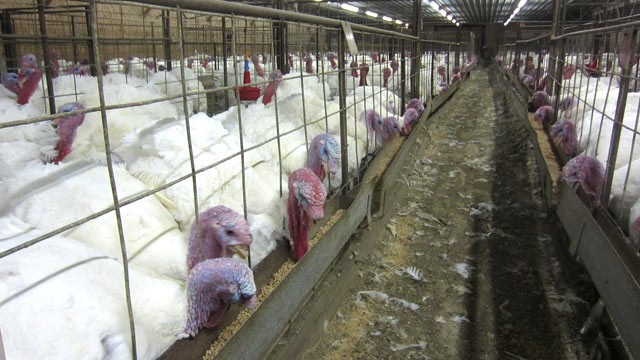
Your run-of-the-mill Butterball breeder
 I'm on a mission. For the third Thanksgiving in a row, I bought a turkey from Skagit River Ranch. No matter that we would be spending the holiday with my in-laws, and that Christmas, too, was spoken for, protein-wise. I parked that fifteen-pound baby in the freezer and hunkered down for the major turkey-eating occasions to pass.

Now I've got to tell you, a humanely-raised local turkey, which grew up roaming organic pastures and supplementing its organic grain diet with delicacies like flaxseed and sea kelp, is no cheap date. Mine set me back $91, roughly double the price of a conventionally-raised gobbler as pictured above. (The photo is from an ABC news report on "turkey abuse" at a NC turkey "facility.") However, in my general addiction to Thrift, I've challenged myself to stretch that turkey into thirteen meals. Why thirteen? Because it makes the math come out even ($7 of meat and/or broth per meal for 4-5 people).

Meal #1: Fancy Turkey Sandwiches. When I used to work in the South of Market district of San Francisco, there was one deli that roasted a turkey every single day, slicing it up into the juiciest, most luscious sandwiches. My mouth still waters, thinking about it. When I planned Fancy Turkey Sandwiches, I had both them and Gilbert's on Main's yummy turkey bagel sandwich in mind. Ingredients: fancy artisan bread, cream cheese, homemade cranberry sauce, lettuce, and thin slices of cucumber. Two of my kids added cheddar.

Meal #2: Fancy Turkey Sandwiches.

Meal #3: Turkey Tortilla Soup. The very day I roasted the turkey, I stripped it of most meat, freezing the meat in packs of two cups each. Then I plunged the carcass in the stock pot with carrots, onion, and water and let it simmer most of the day. When that was done, I strained the broth and froze that in baggies of two cups each, leaving out enough for the first pot of soup.

Meal #4 Fancy Turkey Sandwiches. (I grant you, these were snow day lunches, every day after the first appearance of FTSes.)

Meal #5: Turkey a la King. Two cups of meat; chopped up, steamed vegetables; creamy sauce made with turkey broth, and egg noodles.

Meal #6: FTSes.

Meal #7: Turkey enchiladas. Mix the standard two cups of shredded meat with shredded cheese and salsa and roll 1/2 cup up in each 8" tortilla. Add a strip of cream cheese, if you like extra creamy. Pour enchilada sauce over, sprinkle with cheese and bake till it's how you like it. (I like the cheese not just melted, but browned on top. Maybe 30 minutes covered and 15 uncovered?)

Meal #8: Southern greens with Turkey leg. This one goes in the slow cooker along with some broth and a chipotle in adobo.

And that's how far I've gotten (apart from having just made myself an FTS on a leftover bagel I found in the freezer). I still have the frozen meat, broth, and enough wing and leg and neck bones to do another batch of broth. Thirteen meals shouldn't be a problem!

If you still have leftover turkey hiding out and a favorite recipe idea, please share. I've got pot pies and turkey-wild-rice casserole up my sleeve, but after that I may have to repeat. I think it's safe to say, however, that local/organic can still be thrifty if you put your mind to it. Next year I might need one turkey for the holidays and one for another thirteen-meal marathon!

Tuesday, January 17, 2012

The Oily Truth

Amber Waves of Oil Sources (Bill Kingsbury/ND Tourism)
Since I mentioned in my New Year's Resolutions post that I was phasing out canola oil in 2012, I've received several questions on why, and which oils I planned to substitute. Allow me to explain.

First, what's great about canola oil:
  • It's very low in saturated fat and has a high proportion of monounsaturated fat. I actually don't care about this one because I don't think the fat/heart-disease connection has been nailed down. Yes, artificially-created transfats seem to wreak havoc, but all the lowfat trends in the world haven't reduced the prevalence of heart disease. We've just improved the treatment of it, so people seem to be doing better. I do like my saturated fats grass-fed, however: butter, bacon, beef, milk.
  • Canola oil has a good ratio of omega-6 fatty acids to omega-3s. For a plant, that is. Both of these fatty acids are essential, but in our modern (soybean oil-laden) diet, we tend to get far too many omega-6s, leading possibly to all sorts of health problems, including autoimmune disorders, heart disease and cancer. Canola is better than soy and not quite as good as flax and not nearly as good as fish. Many people don't know it, but grass-fed beef and dairy are also good sources of omega-3s.
What I'm less crazy about, when it comes to canola:
  • 80% of canola grown in Canada is genetically-modified (i.e., tweaked and patented by Monsanto) to resist Round-Up. Which means Monsanto holds farmers hostage to buying their seeds and then the farmers can spray the heck out of their fields with Round-Up.
  • Roughly 90% of American canola is genetically-modified.
  • Beyond potential health and economic justice concerns, GM canola has "escaped" farmers' fields into uncultivated areas. See this NPR article, if you're interested.
So, what am I using instead? Once I get through the remaining half-bottle of canola, I've already lined up olive oil, peanut oil (very similar in nutritional profile to canola but not yet genetically-modified), pastured butter, sesame oil, and ghee.

If olive has too strong a flavor for you, don't use extra-virgin. Save that for salad dressings and use the lower-priced, less-flavored olive oil for cooking.

Better yet, experiment with other ways of preparing foods that don't require as much oil. It's Crock Pot season, after all.

Have a great week!